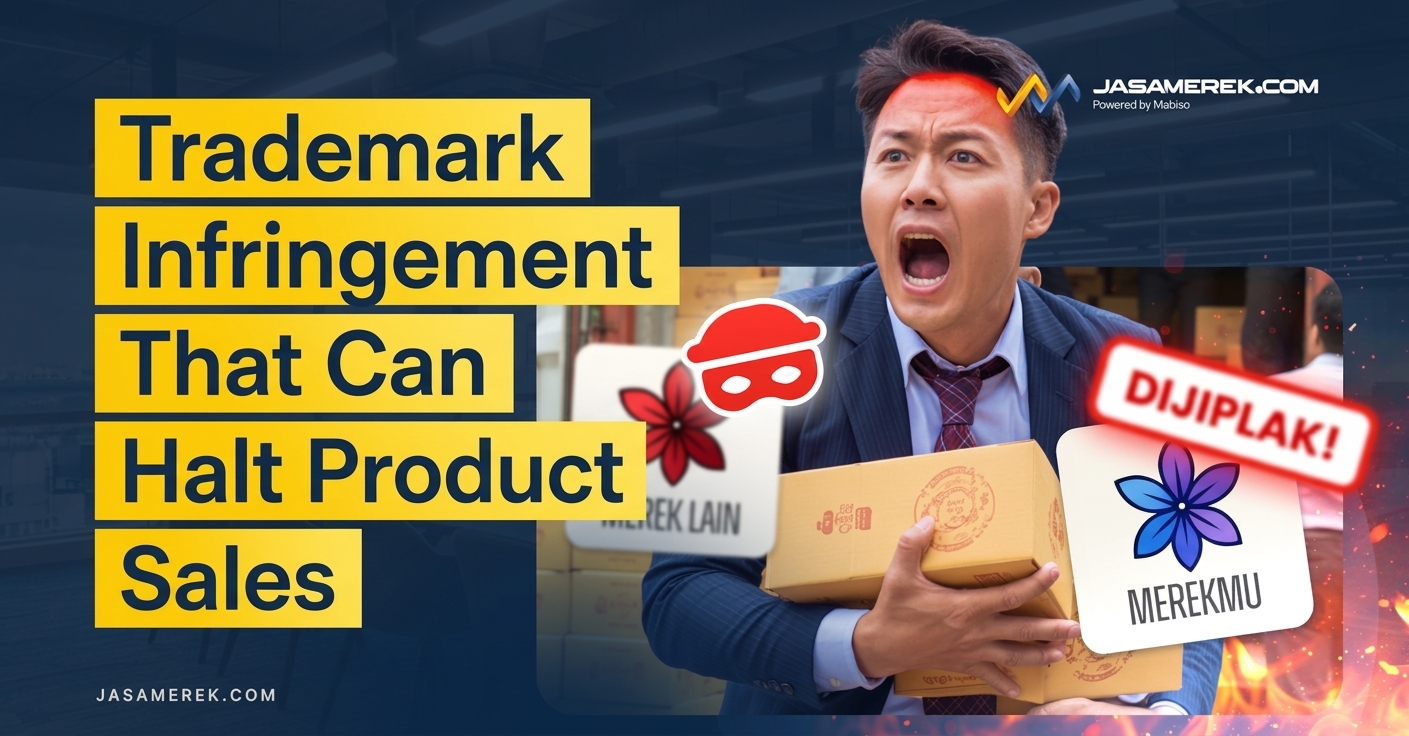
Trademark Infringement That Can Halt Product Sales
Highlights
- Trademark infringement is a real risk in today’s growing buying and selling activities.
- Business transactions can be disrupted by trademark conflicts that are not detected early.
- Understanding the law and reviewing previous cases can help businesses avoid commercial losses.
- Protecting a trademark through professional services such as Jasa Merek can be a strategic step toward keeping sales secure.
Business Activities and the Risk of Trademark Infringement
In today’s highly dynamic business environment, commercial activities such as buying and selling are often the primary focus. Sales increase, distribution expands, and a business’s trademark becomes more widely recognized in the market. However, behind all this growth lies a major risk that business owners often overlook: trademark infringement.
Every business owner needs to understand that trademark infringement does not always begin with a major lawsuit. Many trademark disputes actually start with the unauthorized use of names, logos, or packaging that another party considers similar to its own. When a conflict like this arises, its impact can extend to your sales operations.
For businesses that are already actively conducting transactions, trademark infringement can become a turning point that suddenly disrupts or even halts sales activities. But does the risk end there?
Let’s take a closer look at the risks of trademark infringement and how they can affect your business in the following article.
Why Trademark Infringement Can Halt Sales
In commercial transactions, a trademark is not merely a visual element. More importantly, it serves as the primary identity of your business’s products in the eyes of consumers. When a trademark becomes the subject of a legal dispute, the products associated with it may also be affected.
Some of the potential consequences include:
- Product recalls or removal from the market due to trademark disputes.
- Distribution delays while legal proceedings are ongoing.
- Loss of trust from business partners and resellers.
- Financial losses resulting from inventory that cannot be sold.
At this point, trademark infringement is no longer simply a legal issue. It can become a direct threat to the continuity of your business operations.
Examples of Trademark Infringement in Business Practices
To better understand the risks in practical terms, business owners should also be aware of common examples of trademark infringement that may occur in the market.
1) A Brand Name That Is Similar to a Registered Trademark
Some businesses may feel safe because they use a slightly different variation of a brand name. However, trademark similarities, whether phonetic or visual, may still create a risk of infringement depending on the circumstances.
2) A Logo or Visual Elements That Resemble a Competitor’s
In a competitive market, a design that is too similar to another party’s trademark may trigger an infringement claim, even if the similarity was unintentional.
In trademark disputes, one of the key issues is whether the trademark being used is sufficiently similar to another trademark that has already been registered.
3) Using a Trademark Without Permission in Commercial Activities
For example, a business may sell products using a trademark that has not been registered by the business itself or that belongs to another party.
Using another party’s trademark without permission may lead to a trademark dispute because the business could be accused of infringing or misusing the registered trademark.
You should also understand that each of the examples above can ultimately lead to the same risk: disruption to your sales activities. Once your business becomes involved in a trademark dispute, other business operations may also be affected, potentially disrupting the entire sales and distribution chain.
Trademark Infringement Cases in Indonesia and Their Impact
Trademark disputes in Indonesia are not a new phenomenon. Various trademark cases have shown that even businesses that have been operating for years can still face trademark claims from other parties.
When examining trademark disputes in Indonesia, several recurring patterns can be observed, such as:
- Trademark disputes emerging when a business begins to grow or expand nationally.
- Product sales increasing and brand recognition growing, followed by another party asserting rights or claims over the trademark.
- Legal proceedings disrupting distribution and potentially causing a significant decline in sales.
These situations provide an important lesson for business owners: trademark protection should grow alongside the commercial activities and transactions of the business.
Legal Basis for Trademark Infringement in Indonesia
In Indonesia, the legal framework governing trademarks is primarily established under Law No. 20 of 2016 concerning Trademarks and Geographical Indications (Trademark Law). Various implementing regulations have also been issued under this framework.
Understanding the legal basis for trademark infringement in Indonesia, particularly under the Trademark Law, can help business owners make more informed decisions.
Indonesia’s trademark regulations provide exclusive rights to businesses whose trademarks have been validly registered.
This means that a party that files and registers its trademark first generally has a stronger legal position, regardless of who may have used the trademark first in the market.
This is because Indonesia follows the “first-to-file” principle in trademark protection. In general, the party that files the trademark application first has priority in obtaining trademark rights, subject to the applicable legal requirements.
In the context of commercial transactions, this can create significant risks for businesses that have not formally secured their trademarks. Without a strong legal basis, a business may be in a weaker position when facing a trademark infringement claim from another party.
FAQ
Is trademark infringement always intentional?
No. Trademark infringement can also occur because business owners do not fully understand the applicable trademark laws and regulations.
Does a business have to stop selling its products when a trademark dispute occurs?
Not necessarily in every case. However, depending on the circumstances and legal proceedings involved, product distribution and sales may be disrupted while a trademark dispute is being resolved.
Can a small business be involved in a trademark infringement dispute?
Yes. The size of a business does not automatically eliminate the risk of trademark conflicts.
When is the best time to protect a trademark?
Ideally, trademark protection should be considered from the beginning, especially before or when a trademark is consistently used in commercial activities.
Practical Solutions to Keep Your Business Transactions Secure
For businesses that want to maintain uninterrupted sales while reducing legal risks, working with a trusted professional service can be a strategic option.
A professional approach can help businesses identify potential infringement risks, strengthen their legal position, and reduce the possibility of sales activities being disrupted.
Through professional trademark registration and protection services, Jasa Merek can provide businesses with more structured assistance in protecting their trademarks and maintaining secure commercial activities.


Tagged with:
JM AwareRelated Articles


 Home
 Articles

 Search
 Menu