10+ Examples of Rejected Trademarks in Indonesia and the Reasons Why
A trademark is an important asset that every business owner should protect. However, not every trademark registration process goes smoothly or results in immediate approval. If your trademark does not comply with the applicable requirements, your application may be rejected. In fact, there are many examples of rejected trademarks in Indonesia.
At the time this article was written, numerous rejected trademark applications could be found in the database of Indonesia’s Directorate General of Intellectual Property (DGIP). These applications were not rejected without reason, as trademark refusals are generally based on the applicable laws and regulations.
So, what are some examples of trademarks that have been rejected in Indonesia? What regulations govern trademark rejection?
This article provides a concise yet comprehensive overview of rejected trademark examples and the regulations that form the legal basis for trademark refusal in Indonesia.
Reasons Why Trademark Applications Are Rejected
Before discussing examples of trademarks that have been rejected in Indonesia, it is important to understand why a trademark application may be refused.
During the trademark registration process, an application is not rejected without a legal basis. Every rejected trademark application generally has specific grounds that explain why the DGIP refused its registration.
Trademark rejection or refusal is based on Indonesian trademark regulations, which establish the criteria for marks that cannot be registered.
These regulations serve as the legal basis for the DGIP when determining whether a trademark can be registered or whether its application must be rejected because it meets certain prohibited criteria.
Referring to Article 21 of Indonesia’s 2016 Trademark Law, several circumstances may result in a trademark application being rejected, including:
- The trademark is identical or substantially similar to a registered trademark owned by another party, or to a trademark that was previously filed by another party, for similar goods and/or services;
- The trademark is identical or substantially similar to a well-known trademark owned by another party for similar goods and/or services;
- The trademark is identical or substantially similar to a well-known trademark owned by another party for different goods and/or services, subject to certain requirements;
- The trademark is identical or substantially similar to a registered Geographical Indication;
- The application is filed in bad faith;
- The trademark is identical or substantially similar to the name or abbreviation of a well-known person, photograph, or name of a legal entity owned by another party, unless written consent has been obtained from the rightful owner;
- The trademark is identical or substantially similar to the name, abbreviation, flag, emblem, symbol, or insignia of a country or a national or international institution, unless written authorization has been obtained from the relevant authority; or
- The trademark is identical or substantially similar to an official sign, seal, or stamp used by a state or government institution, unless written authorization has been obtained from the relevant authority.
Therefore, if the trademark you intend to register contains any of the elements above, there is a significant possibility that it could become another example of a rejected trademark.
In such circumstances, you may need to modify or replace the trademark with one that complies with the applicable requirements and does not contain prohibited elements.
In addition, there are several categories of trademarks that cannot be registered in Indonesia, including trademarks that:
- Contradict the state ideology, applicable laws and regulations, morality, religion, public decency, or public order;
- Are identical to, related to, or merely describe the goods and/or services for which registration is sought;
- Contain elements that may mislead the public regarding the origin, quality, type, size, variety, or intended use of the goods and/or services, or contain the name of a protected plant variety for similar goods and/or services;
- Contain information that is inconsistent with the quality, benefits, or characteristics of the goods and/or services being offered;
- Lack distinctiveness; and/or
- Consist of generic names and/or symbols that belong to the public domain.
Rejected Trademark Applications in Indonesia
Unfortunately, when reviewing trademark records through Indonesia’s Intellectual Property Database (PDKI), the DGIP does not always publicly display the detailed reasons behind the refusal of a particular trademark application.
In general, the specific grounds for refusal are communicated directly to the applicant or trademark owner concerned.
Nevertheless, by referring to the applicable trademark regulations, we can analyze whether a rejected trademark may have met one or more of the conditions that can result in refusal or make a trademark ineligible for registration.
With that in mind, the following sections discuss several examples of rejected trademark applications in Indonesia:
1. Bestea
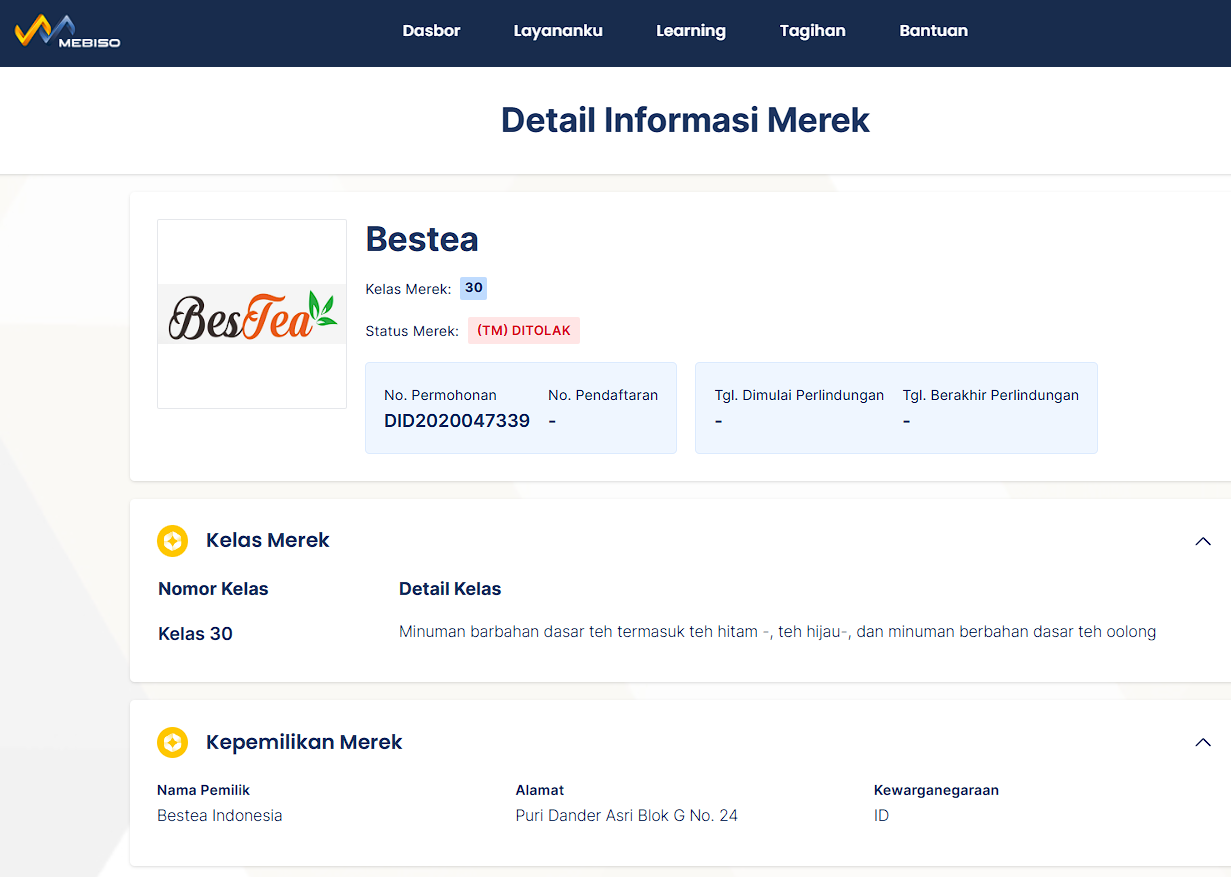
As mentioned earlier, the DGIP does not publicly specify the exact reason why the Bestea trademark application was rejected. Therefore, we can only infer that the application may have been refused because the trademark was considered identical or substantially similar to an earlier registered trademark.
2. Susu Steril
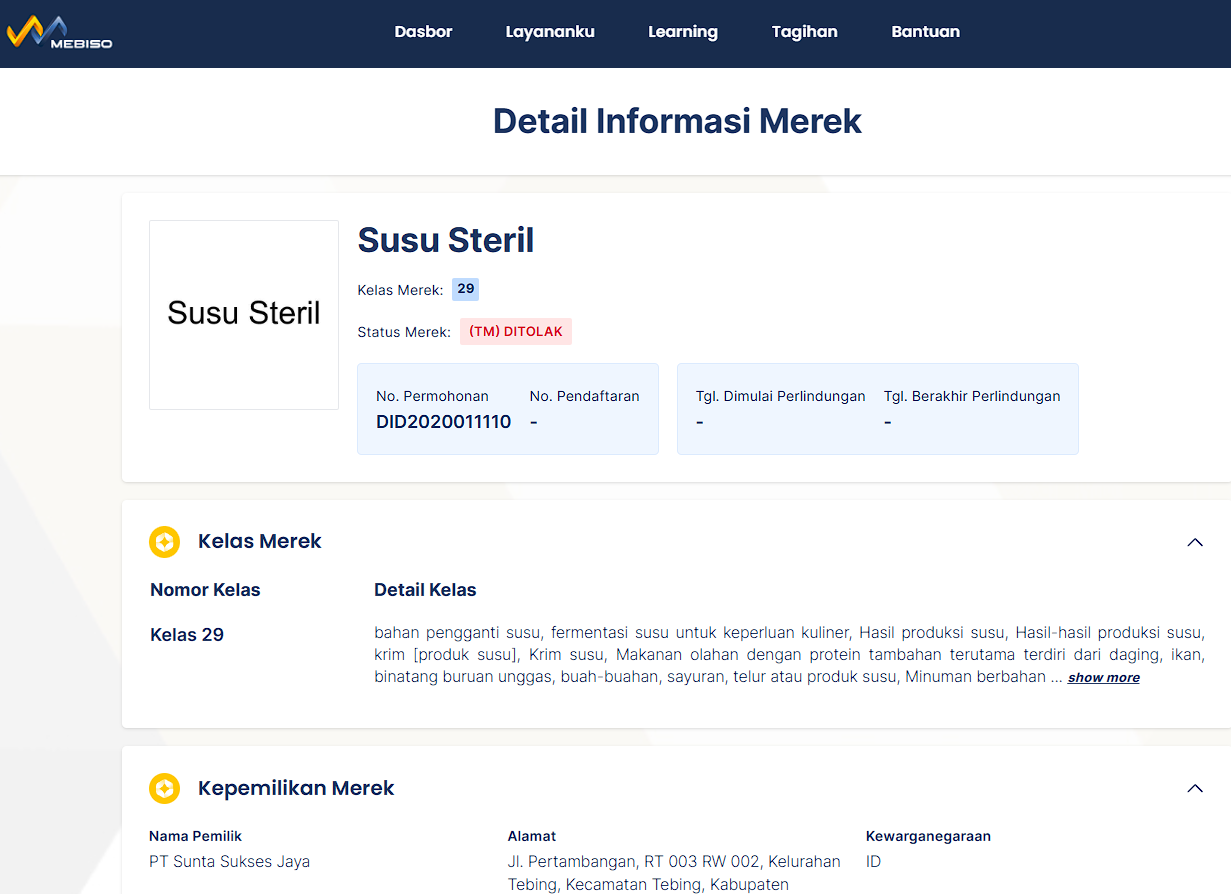
Another example of a rejected trademark application is “Susu Steril.” This trademark may have been refused because the name lacks sufficient distinctiveness. In addition, because “Susu Steril” directly describes or is closely associated with the product itself, this may also have been a factor in the rejection.
3. Y
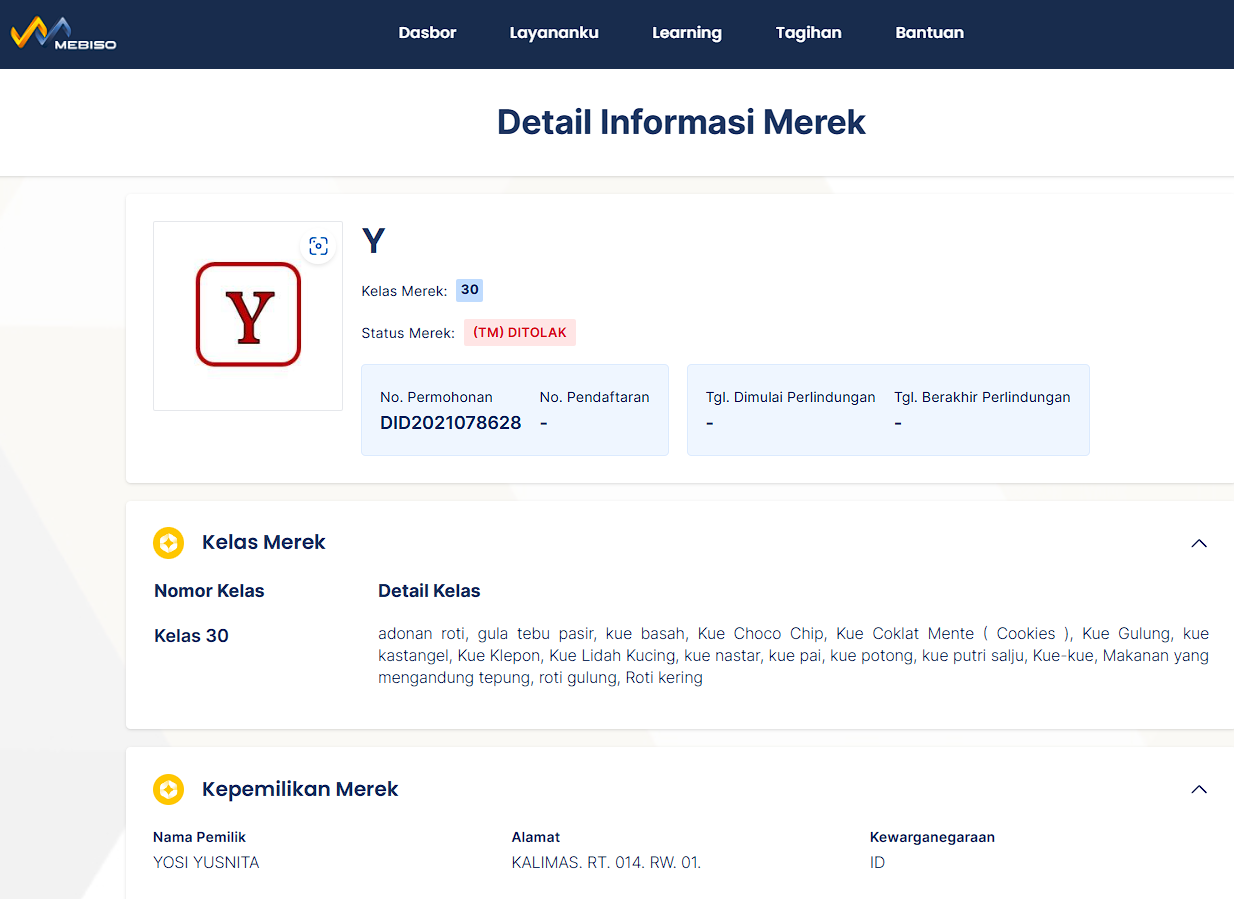
The trademark “Y” is another example of a trademark application that was rejected. One possible reason is that the mark consists of only a single letter and does not include any additional elements that provide sufficient distinctiveness.
If the trademark had included other distinctive elements—either in the name itself or in its logo design—it might have had a better chance of being accepted for registration.
4. A
Similar to the previous examples, the “A” trademark may have been rejected for one or both of the following reasons:
- It lacks sufficient distinctiveness.
- It is identical or substantially similar to another trademark that was registered earlier.
5. USAHAKU
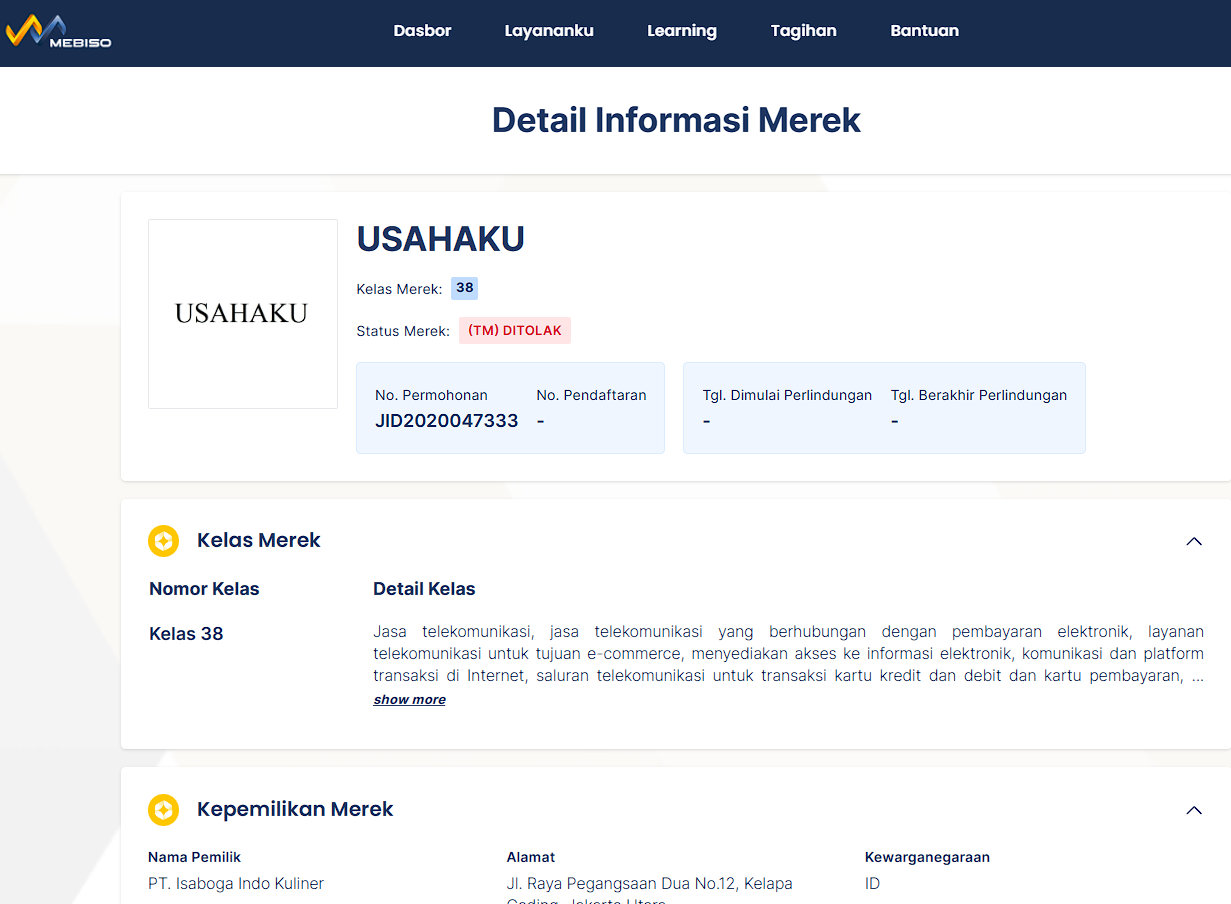
The “USAHAKU” trademark is another example of a rejected trademark application. The application may have been refused because the mark lacked sufficient distinctiveness and/or merely described the services for which registration was sought.
6. RODA DUA
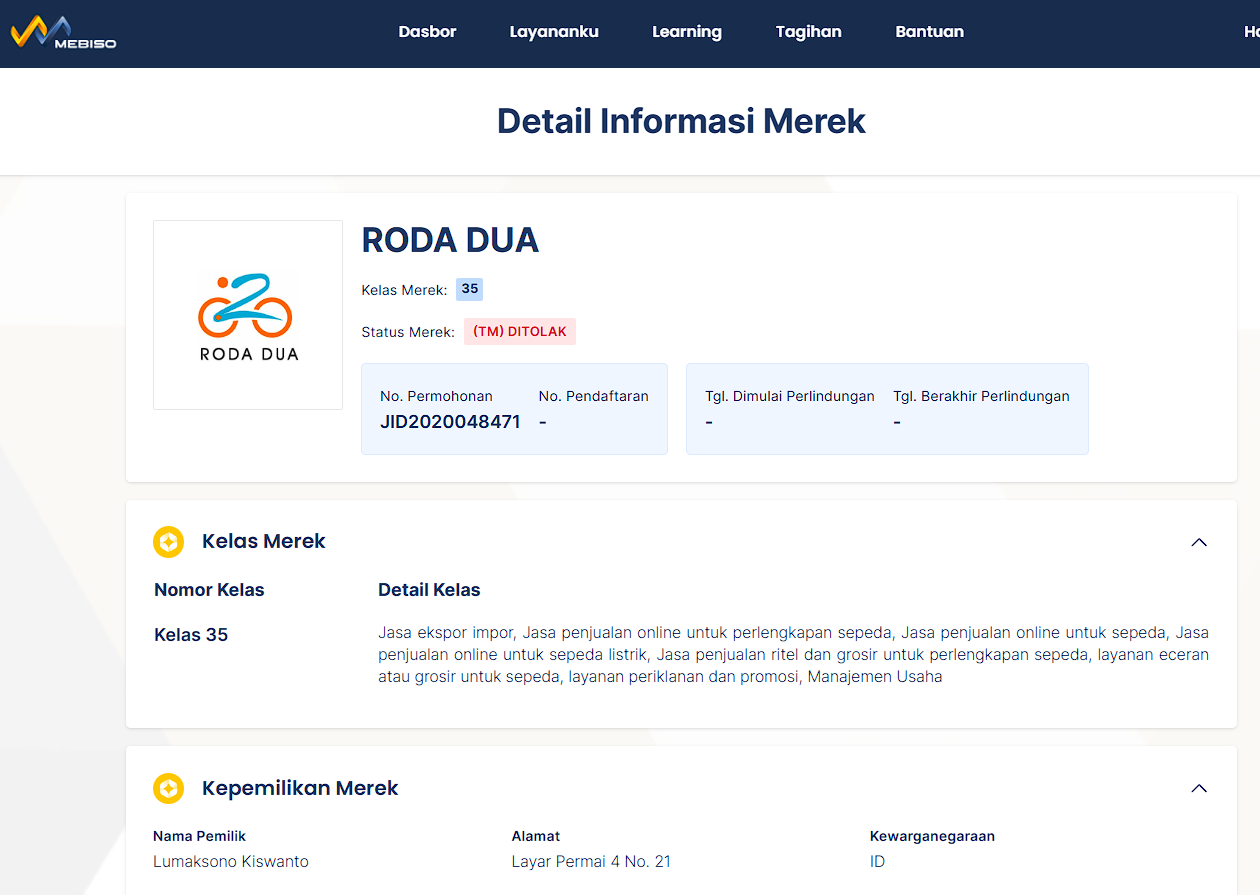
Although “RODA DUA” may initially appear to have a chance of being registered because it includes a logo as an additional distinctive element, the trademark application was nevertheless rejected by the DGIP.
One possible reason for the refusal is that the trademark name is closely related to the goods associated with the business, namely two-wheeled bicycles or vehicles. Under Indonesian trademark regulations, a mark may be refused if it merely describes or directly relates to the goods and/or services for which registration is sought.
7. Cin & cau
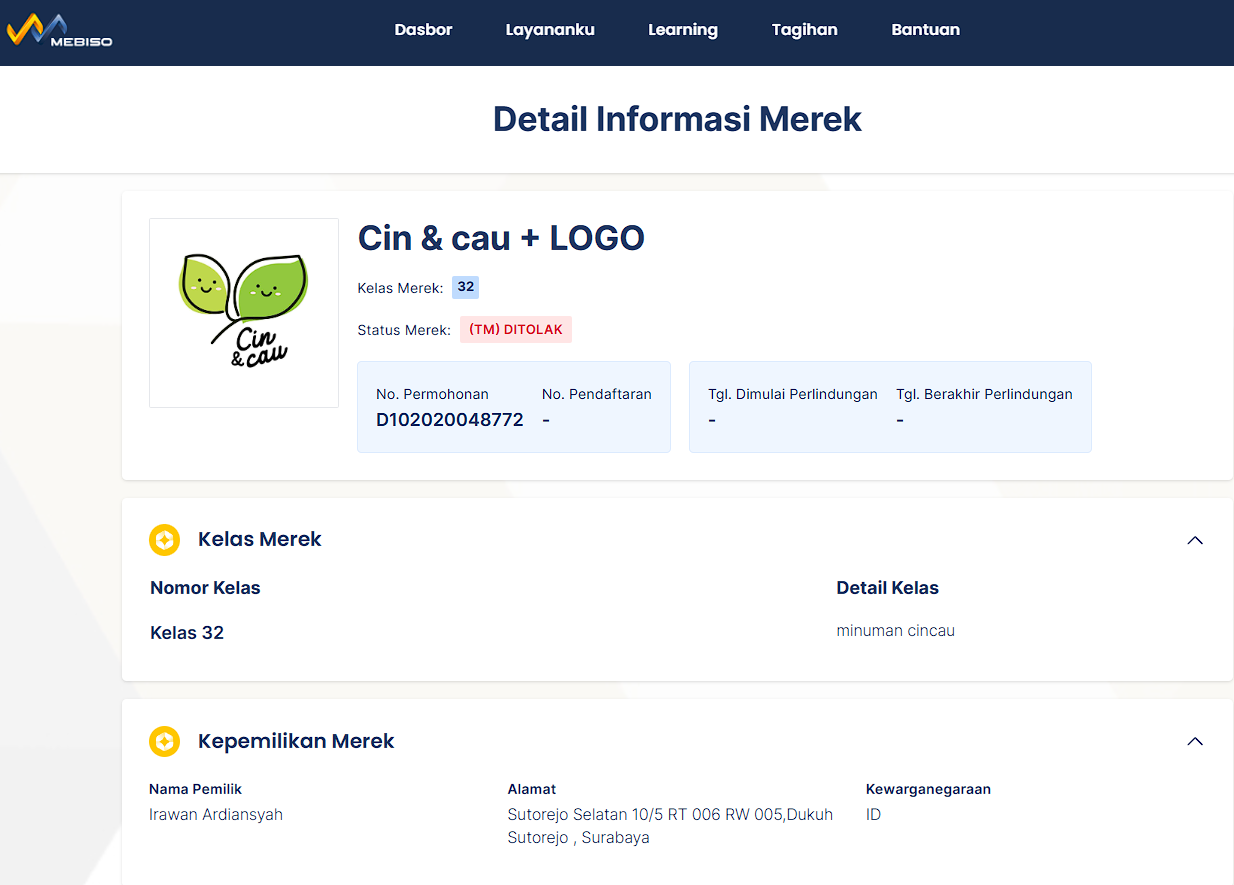
The same reasoning may also apply to the “Cin & cau” trademark. The application may have been rejected because the trademark name is closely associated with the product being registered, namely cincau, or grass jelly drinks.
Because the name directly relates to the goods offered, it may be considered descriptive and therefore lack sufficient distinctiveness as a trademark.
8. PUTRI MENEER
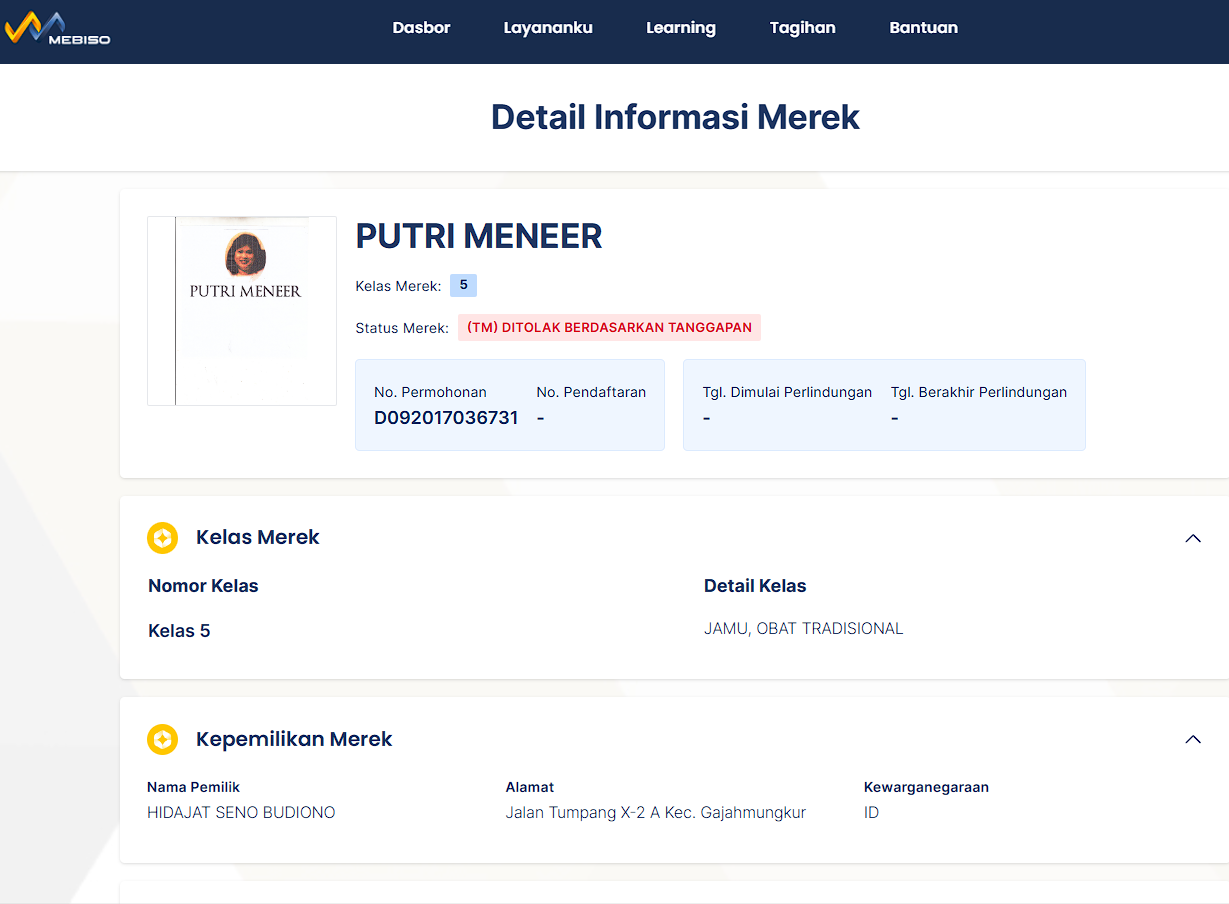
Now, take a closer look at the “PUTRI MENEER” trademark. Upon reviewing its status, there is an additional note stating “Rejected Based on Response.”
This indicates that before the application was officially rejected, it had received an objection or opposition from another party whose trademark had already been registered.
In other words, it can be reasonably assumed that the “PUTRI MENEER” trademark application was rejected because a similar trademark had already been registered earlier for similar goods or services.
9. pasar.id
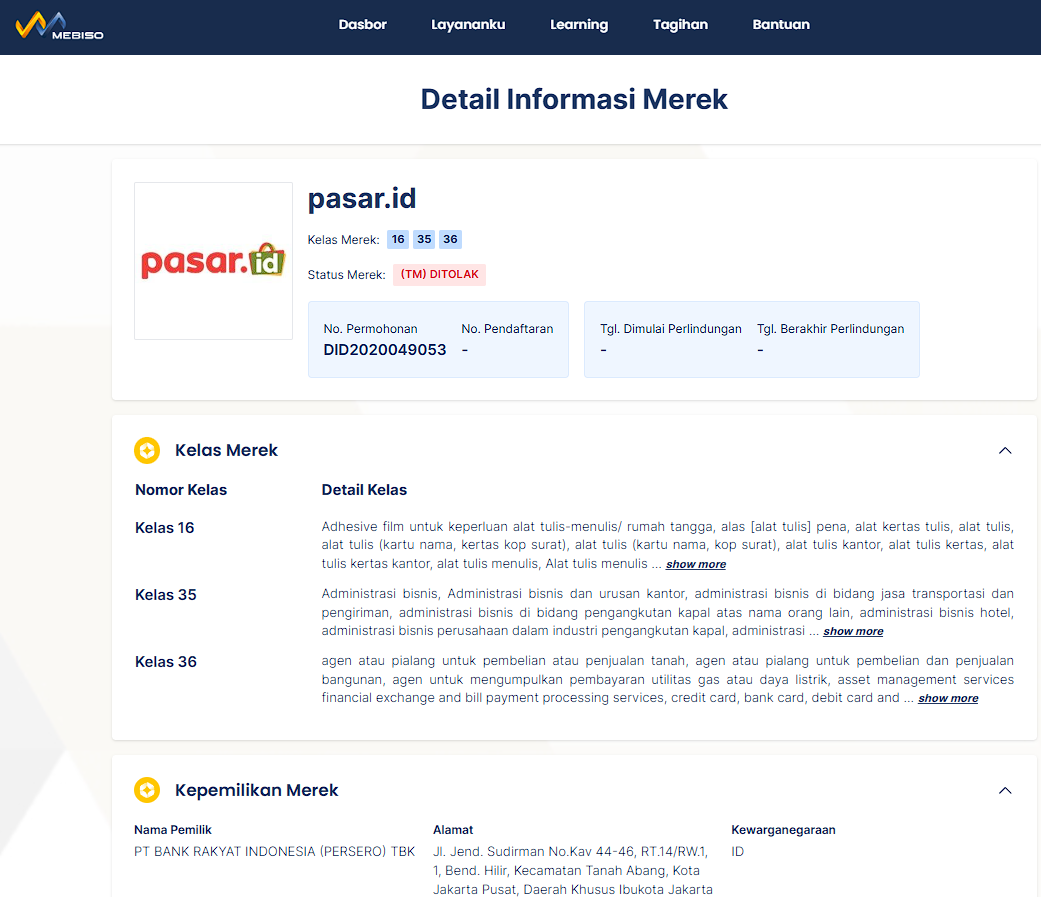
In fact, trademark applications filed by large companies can also be rejected. One example is “pasar.id,” which was filed by PT Bank Rakyat Indonesia (Persero) Tbk (BRI).
Based on the available information, one possible reason for the refusal is that the mark may have lacked sufficient distinctiveness and/or been considered similar to an earlier registered trademark.
10. LOGO (TITIKOMA)
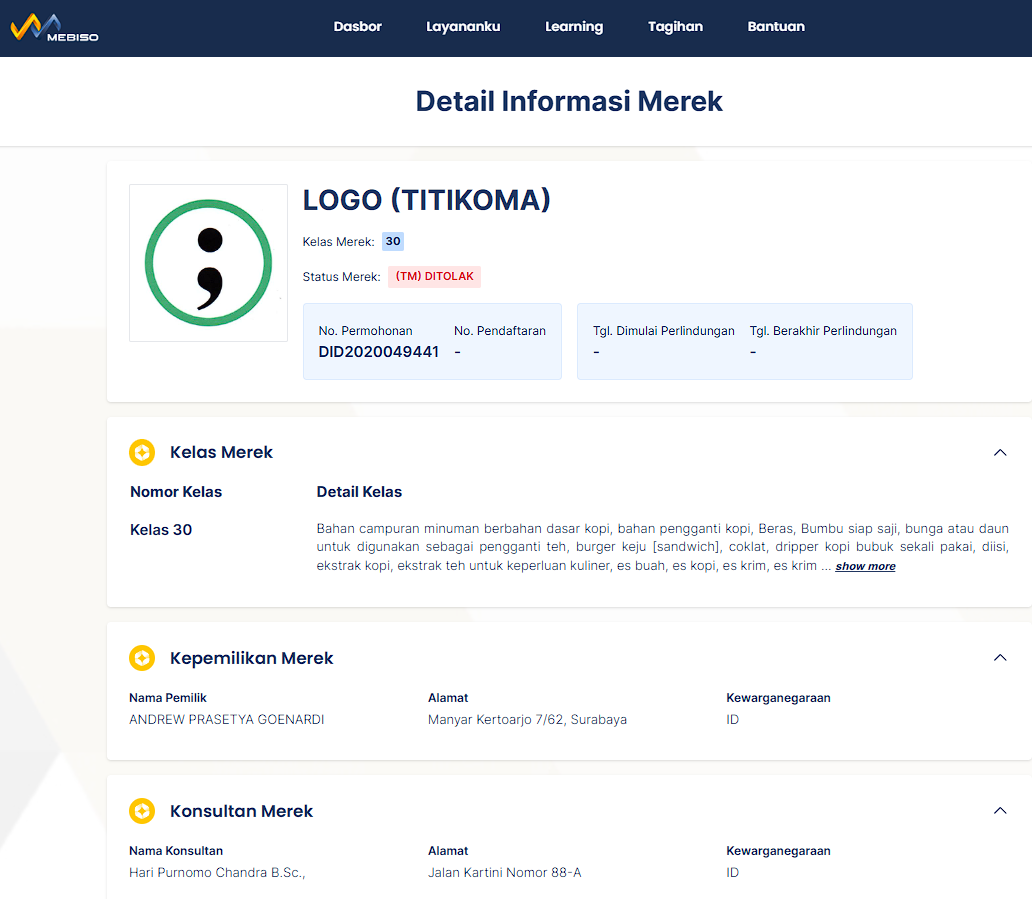
Next is the “TITIKOMA” logo trademark. The application may have been rejected for one or more of the following reasons:
- The mark may have lacked sufficient distinctiveness.
- It may have consisted of a generic name or a commonly used symbol.
If additional distinctive elements had been incorporated into the trademark—such as unique wording or a more distinctive logo design—the application might have had a better chance of being accepted for registration.
11. ACTION
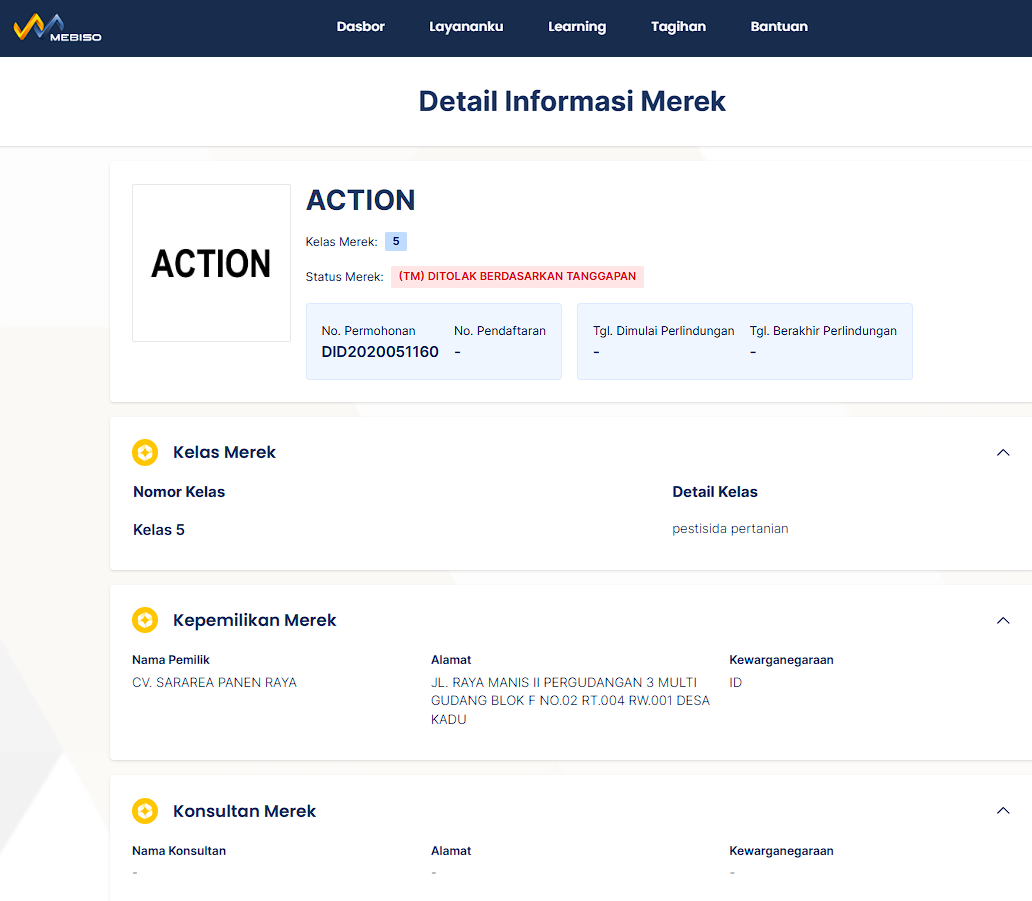
The rejection of the “ACTION” trademark may have been based on the fact that the mark lacked sufficient distinctiveness and/or consisted of commonly used words.
For this reason, it is important to include additional distinctive elements so that a trademark has a stronger identity and a better chance of being accepted for registration.
Make Your Trademark Truly Yours!
From the examples above, we can conclude that a trademark should not only be unique, but must also comply with the applicable trademark regulations in Indonesia. This is important to improve the chances of your trademark application being accepted and successfully registered.
If your trademark already complies with the requirements and has sufficient distinctiveness, now is the right time to secure it as an important asset of your business.
Entrust your business trademark registration needs to an experienced professional service at Jasa Merek!
FAQ
What regulations form the legal basis for trademarks in Indonesia?
Trademark regulation in Indonesia is primarily governed by the 2016 Trademark Law, together with its implementing regulations.
Where can I file a trademark application in Indonesia?
Trademark applications in Indonesia can be submitted to the Directorate General of Intellectual Property (DGIP), the government authority responsible for intellectual property protection in Indonesia.
Why can a trademark application be rejected?
A trademark application may be rejected if it falls within the categories of marks that cannot be registered and/or marks that are subject to refusal under Indonesia’s 2016 Trademark Law.


Related Articles







 Home
Home
 Articles

 Search
 Menu
Menu