5 Tips to Speed Up the Trademark Registration Process
Highlights
- Trademark registration in Indonesia generally takes around 8 to 12 months, depending on the completeness and circumstances of the application.
- The trademark registration process includes formality examination, publication, substantive examination, and certificate issuance.
- The processing time can be affected by trademark similarity, document completeness, class selection, third-party objections, and the examination queue at DJKI.
- The process can be made more efficient by conducting an early trademark search, choosing a unique name, preparing complete documents, and using professional trademark services.
Many business owners choose to delay trademark registration because they believe the process is long and complicated.
In reality, a trademark is an essential part of your business identity. It helps protect your products while building trust among customers and the marketplace.
Without clear legal protection, your business may face trademark disputes or even lose the rights to a brand name you’ve worked hard to build.
This article will help you understand the trademark registration timeline in Indonesia, the stages involved in the registration process, and practical ways to help make the process smoother so your business can stay protected and continue growing with confidence.
Trademark Registration Timeline in Indonesia
Many business owners hope that registering a trademark can be completed within just a few weeks.
However, the reality is that trademark registration in Indonesia takes considerably longer.
In general, the process takes approximately eight to twelve months, starting from the initial application until the trademark certificate is issued.
This estimated timeline follows the official registration process administered by the Directorate General of Intellectual Property (DJKI), which includes administrative and substantive examinations.
However, this timeframe is not absolute. Certain conditions may allow the process to move faster, such as when all required documents are complete and the examiner finds no similarities with existing trademarks.
On the other hand, the registration process may take longer if there are issues such as document revisions or objections filed by third parties.
This is why trademark registration requires patience, but the legal protection you receive makes the process worthwhile for the long-term security of your business.
Stages of the Trademark Registration Process
To better understand why the trademark registration timeline can take several months, let’s look at each stage of the registration process in Indonesia.
1. Formality Examination
During the first stage, the examiner reviews whether all submitted documents are complete and meet the administrative requirements.
These documents include the applicant’s information, trademark label, and the selected trademark class.
If there are errors or missing information, you will be asked to make corrections.
This stage generally takes around 15 to 30 days, depending on the completeness of your application.
2. Publication Period
Once the application passes the initial examination, your trademark will be published publicly for approximately two months.
The purpose of this publication period is to provide an opportunity for other parties to file an objection if they believe the proposed trademark is too similar to theirs or infringes upon their existing rights.
3. Substantive Examination
The substantive examination is the most important stage because it determines whether your trademark application will be accepted or rejected.
During this stage, the examiner conducts a comprehensive review to assess:
- Similarity to existing registered trademarks
- Potential to mislead consumers
- Compliance with applicable trademark laws and regulations
This examination typically takes several months because it requires detailed legal and factual analysis.
4. Certificate Issuance
If your trademark successfully passes all examination stages, DJKI will issue a trademark certificate as official proof of legal protection.
This process generally takes around one to two months after the substantive examination has been completed.
Factors That Affect the Trademark Registration Timeline
Although trademark registration generally takes between eight and twelve months, the actual processing time may vary for each application.
Several factors can influence how quickly your trademark is registered.
1. Similarity to Existing Trademarks
One of the most common reasons trademark applications take longer is the discovery of similarities with existing registered trademarks.
If your trademark is considered too similar, it may be rejected or require additional clarification during the examination process.
For this reason, choosing a distinctive and original brand name can significantly improve the chances of a smoother registration process.
2. Complete and Accurate Documentation
Errors in your application, such as incorrect applicant names, addresses, or trademark details, can delay the registration process.
Even small mistakes may result in revisions that require additional processing time.
Therefore, accuracy is essential before submitting your application.
3. Choosing the Correct Trademark Class
Many business owners mistakenly register their trademark under the wrong class.
For example, registering a beverage product under a clothing trademark class.
Selecting the incorrect class can delay your application and may require corrections or even a completely new submission.
4. Objections from Third Parties
During the publication period, other parties have the legal right to file objections against your trademark application.
If an objection is submitted, the registration process will enter additional legal procedures, which naturally extends the overall processing time.
5. Examination Queue at DJKI
The number of trademark applications being processed by DJKI also affects registration speed.
The higher the number of applications, the longer the examination queue may become.
While this factor is beyond your control, you can anticipate potential delays by submitting your trademark application as early as possible.
Tips to Speed Up the Trademark Registration Process
For business owners, waiting several months for trademark registration is certainly not ideal.
Fortunately, there are several practical steps you can take to help make the registration process more efficient while minimizing potential obstacles along the way.
Here are five useful tips.
1. Conduct a Trademark Search Early
Before filing your trademark application, make sure your brand name has not already been registered or is not confusingly similar to an existing trademark.
Conducting research and an early trademark search can help reduce the risk of rejection, which may significantly extend the registration timeline.
2. Choose a Unique Trademark Name
Trademark names that are too generic or highly descriptive are often more difficult to register.
They also carry a greater risk of being similar to existing brands.
Instead, choose a distinctive, memorable, and character-driven brand name to improve the likelihood of a successful registration.
3. Select the Correct Trademark Class
Choosing the wrong trademark class may result in revisions or the need to submit a new application.
This can add unnecessary time to the registration process.
Make sure you fully understand which trademark class best matches your products or services before filing your application.
4. Ensure All Documents Are Complete and Accurate
Carefully review every document and piece of information before submitting your application.
Avoid spelling errors, incomplete documents, or inaccurate details.
This simple step can save considerable time by reducing the need for repeated corrections during the administrative review process.

5. Use Professional Trademark Services
If you find the trademark registration process too complex or time-consuming, working with an experienced trademark professional can be a practical solution.
Professionals are generally familiar with common registration issues and know how to identify potential problems before they become major obstacles.
This can help make the overall process more efficient while improving the quality of your application.
FAQ
1. How long does trademark registration take?
A registered trademark receives legal protection for 10 years from the filing date of the trademark application.
2. Is trademark registration mandatory?
A trademark, whether it is a logo, symbol, or business name, is highly recommended to be officially registered.
Registration provides your business with a legal foundation to protect your brand if it is copied, misused, or claimed by unauthorized parties.
3. How much does trademark registration cost?
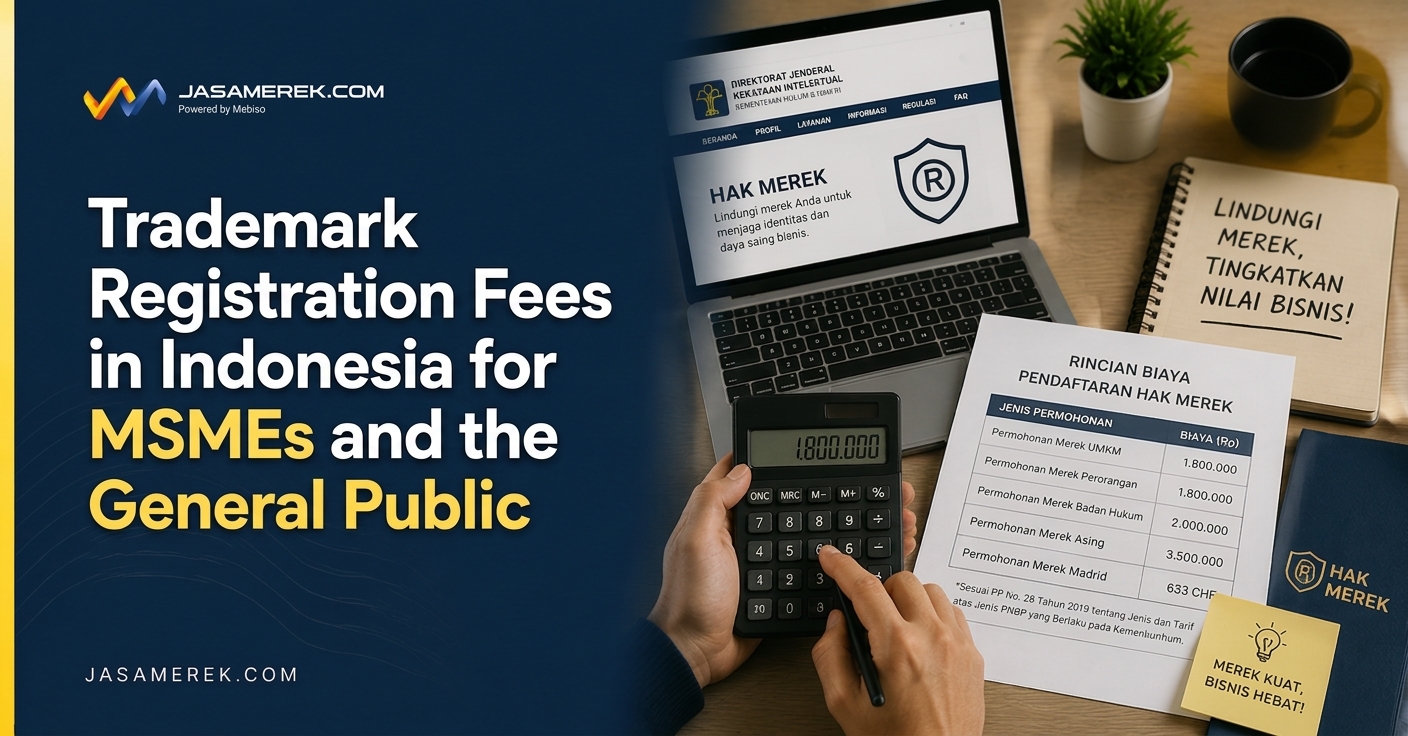
Based on Government Regulation No. 45 of 2024, trademark registration fees in Indonesia are divided into two main categories per class of goods or services:
- IDR 500,000 for Micro and Small Enterprises (UMK)
- IDR 1,800,000 for General applicants (non-UMK)
A Faster and Safer Trademark Registration Solution for Your Business
Registering a trademark requires time, attention to detail, and a thorough understanding of the application process.
Without experience, even minor mistakes can cause delays or potentially result in rejection.
That is why many business owners choose to work with professional trademark registration services to make the process more practical and manageable.
With Jasa Merek, you can receive assistance throughout the entire registration journey—from conducting a trademark search and determining the appropriate trademark class to guiding your application until the trademark certificate is issued.
Instead of worrying about the trademark registration timeline, let experienced professionals handle the process while you focus on growing your business with greater peace of mind.


Related Articles







 Home
Home
 Articles

 Search
 Menu
Menu