4 Business Strategies to Avoid Copyright Infringement

Highlights
- Businesses need to conduct regular audits of their business assets. The audit should cover brand names, logos, packaging designs, promotional photos and videos, website content, social media materials, and music used for advertisements.
- Businesses must use licensed assets for commercial purposes. Businesses need to ensure that photos, music, templates, fonts, and software have licenses that allow their use for promotional activities and business transactions.
- Businesses should build an original brand identity that does not resemble other parties. Businesses need to conduct research on brand names, logos, and branding concepts to avoid potential plagiarism or disputes with competitors.
- Businesses should register their intellectual property from the beginning. Copyright and trademark registration provide a stronger legal protection foundation and help reduce the risks of product removal, rebranding, and sales disruptions.
As business owners, many entrepreneurs focus on increasing sales and ensuring smooth buying and selling transactions.
However, did you know that there is a risk often overlooked by businesses? That risk is none other than copyright infringement.
What does this mean?
Many businesses use designs, photos, content, or even music for promotional purposes without fully understanding the legal aspects behind them.
Such mistakes are often considered minor, but they can lead to warnings, product removal from marketplaces, and even legal claims.
Therefore, this article will discuss the potential risks and preventive measures businesses can take to remain safe, credible, and free from legal obstacles.
Common Forms of Copyright Infringement in Business
Many business owners prioritize speed in production and marketing but pay less attention to the legality of the creative assets they use.
In reality, every asset, including designs, photos, written content, music, and brand identity elements, is protected under copyright laws and other intellectual property regulations.
Here are some of the most common forms of copyright infringement that occur in businesses:
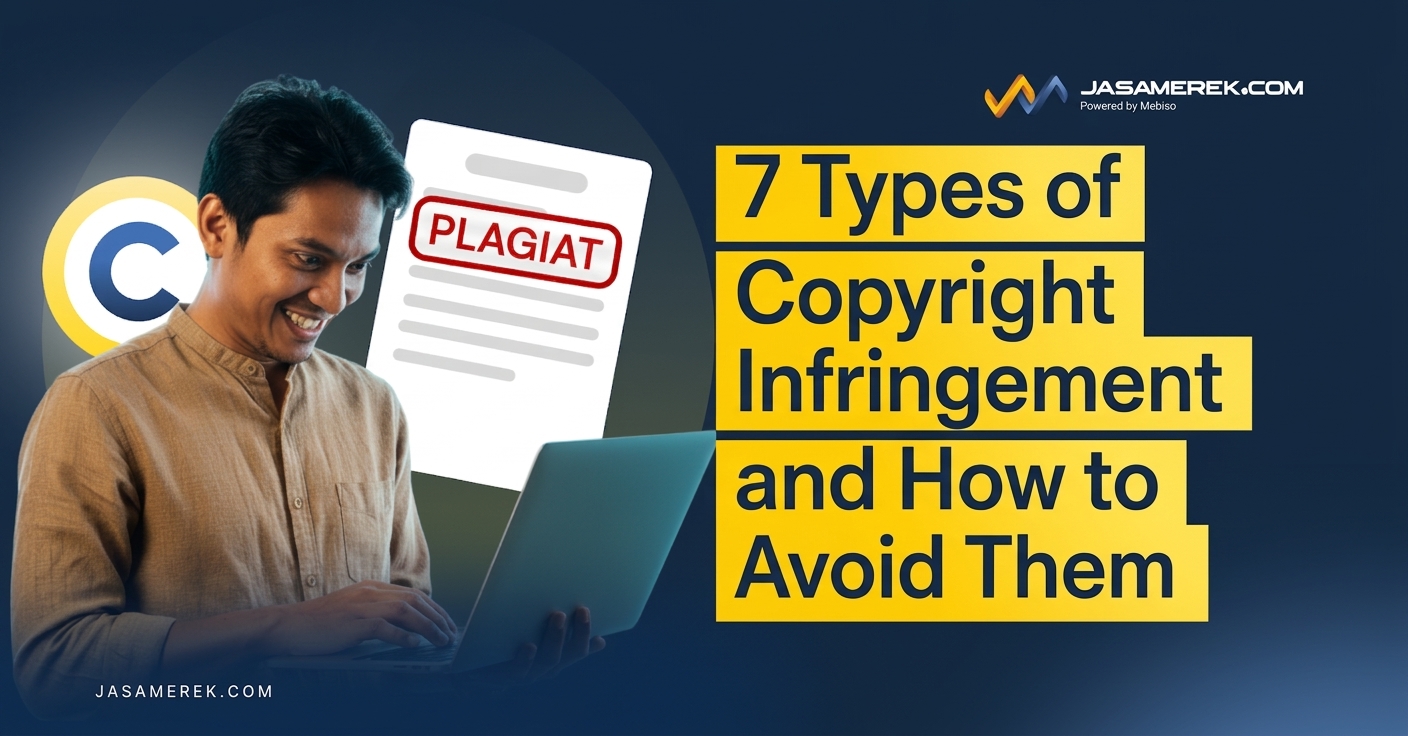
1. Using Designs and Content Without Permission
This type of infringement frequently occurs in promotional and branding activities, such as:
- Using competitors’ product photos for catalogs or marketplace listings
- Copying packaging designs that are already well-known in the market
- Duplicating product descriptions, articles, or promotional captions from other websites
- Using premium design templates without purchasing an official license
These actions are considered copyright infringement because businesses are using someone else’s work without permission from the copyright owner.
2. Similar Brand Names or Potential Plagiarism
Many business owners choose brand names that sound familiar so they can be recognized by the market more quickly. However, this strategy can create risks if:
- The brand name is similar to a previously registered trademark
- The logo and visual elements imitate an established brand
- The branding concept is intentionally created to resemble competitors and appear as an alternative version
Similar brand names can trigger legal disputes, plagiarism claims, and rejection during trademark registration with the Directorate General of Intellectual Property (DJKI).
Cases like these often lead to serious conflicts because they involve business identity and reputation.
3. Copyright Infringement of Music for Commercial Purposes
Music copyright violations are also common, especially in promotional activities, such as:
- Playing popular music in stores, cafés, or business locations without paying applicable royalties
- Using copyrighted songs for promotional content on social media
- Adding popular music to paid advertisements without commercial licensing
Using music for commercial purposes generally requires official permission from the copyright holder.
4. Reproducing and Distributing Digital Works Without Authorization
In the digital era, copyright violations also frequently occur through:
- Reselling ebooks without permission from the author
- Using pirated software for business operations
- Recording and redistributing online courses or training materials without authorization
All of these actions may result in copyright infringement penalties, ranging from warnings and fines to legal claims that can negatively impact a business financially and damage its reputation.

The Impact of Copyright Infringement on Transactions and Consumer Purchase Decisions
Copyright basically protects original works created through ideas and creativity, including business identity elements such as logos, visual designs, and promotional materials.
In addition, brand names are protected through trademark registration. However, overall brand identity remains closely related to intellectual property protection.
The following are some of the most common impacts of copyright infringement cases on businesses in Indonesia:
Read also: How to Obtain a Copyright Certificate
1. Disruption to Sales Activities
Similar brand names can trigger reports from owners of previously registered trademarks. As a result:
- Products may be removed from marketplaces
- Business accounts may be temporarily suspended
- Product distribution may be stopped until the dispute is resolved
This situation can significantly disrupt business transactions and reduce revenue, which is something every business owner wants to avoid.
2. Financial Losses and Rebranding Costs
If a dispute continues, businesses may face:
- Compensation claims
- Legal expenses
- Obligations to change brand names and all promotional materials
The rebranding process can require significant costs because it involves changing packaging, logos, website domains, and advertising materials.
3. Declining Consumer Trust
A brand name is one of the main factors influencing consumer purchasing decisions. When consumers become aware of disputes or alleged plagiarism, several consequences may occur:
- Consumer trust in the brand decreases
- Customers begin to question the professionalism of the business
- Consumers may switch to competitors that are considered safer and more legally compliant
In the long term, damaged reputation can reduce conversion rates and customer loyalty.
Therefore, protecting brand identity is not merely a legal formality but an important foundation for maintaining transaction stability and supporting business growth.
Strategies to Avoid Copyright Infringement in Business Transactions
Every business owner can take preventive steps to avoid copyright infringement within their business activities. The goal is to ensure that the business remains safe, professional, and free from legal disputes that could disrupt ongoing transactions.
Here are several strategies that can be implemented:
1. Conduct a Comprehensive Business Asset Audit
Business owners should review all assets used in their buying and selling activities, including:
- Brand names and logos
- Packaging designs
- Promotional photos and videos
- Website and social media content
- Music used for advertising purposes
This audit helps identify potential similarities or unauthorized use of copyrighted materials from the beginning.
2. Use Official Licenses for Commercial Purposes
Make sure every creative asset used by the company is legally obtained or has proper authorization. Businesses should use:
- Photos from licensed platforms
- Music with commercial licenses
- Original software for business operations
Using legally licensed assets helps businesses avoid unnecessary legal risks.
3. Create an Original Brand Identity
Avoid choosing brand names or concepts that closely resemble competitors. Conduct proper research before establishing a business identity to prevent potential disputes in the future.
A unique and original brand identity also helps businesses build stronger recognition and credibility in the market.
4. Register Intellectual Property from the Beginning
The safest step is to officially register business works and identities. With clear legal protection, business owners can conduct transactions more safely and confidently.
Frequently Asked Questions (FAQ)
1. What Are Some Examples of Copyright Infringement?
Copyright infringement examples include plagiarism in academic works, downloading or watching movies from illegal platforms, and using copyrighted materials without permission.
2. What Does Copyright Infringement Look Like?
Copyright infringement refers to actions that violate the rights of copyright holders.
Examples include photocopying a book and selling the copied versions without authorization from the copyright owner.
3. What Are the Penalties for Copyright Infringement?
Based on applicable copyright regulations, copyright violators may face criminal penalties of up to 4 years of imprisonment or fines of up to IDR 500 million.
Protect and Register Your Business Brand Before It Is Too Late
In an increasingly competitive business environment, brand identity has become one of the most valuable assets. Brand names, logos, promotional designs, and content materials are part of intellectual property assets that need to be protected from the beginning.
Without clear legal protection, business owners face risks such as disputes, product removal from marketplaces, and costly rebranding processes.
To ensure that buying and selling transactions remain secure and businesses can grow without legal obstacles, it is important to protect creative works through official registration.
Use the Official Copyright Registration Service to ensure that every creative asset of your business is legally protected. With this step, business owners can carry out sales strategies with greater confidence, professionalism, and competitiveness.


Tagged with:
Hak Cipta AwareRelated Articles





 Home
 Articles

 Search
 Menu