Copyright Registration Process for Product Promotional Content

Highlights
- The copyright registration process is important for businesses that actively use promotional content in their sales activities.
- Product photos, catalog designs, and advertising content are creative assets with economic value.
- Understanding the copyright registration process helps businesses navigate the different stages of protecting their creative works.
- Copyright protection services, such as those provided by Jasa Merek, can help safeguard the investment businesses make in promotional content used for marketing.
Copyright Registration Process to Protect Promotional Content
For an established business, understanding the copyright registration process is an important step in ensuring a smooth application and avoiding potential mistakes along the way.
Copyright protection for business content can cover promotional materials such as product photos, catalog designs, and social media content, which often play an important role in influencing customers’ purchasing decisions.
Many businesses invest significant amounts of money in creating engaging marketing content, from professional product photography and graphic design to promotional video production.
Once a marketing strategy becomes effective and sales begin to increase, these materials are typically used across various business activities, such as:
- Marketplace catalogs;
- Social media promotions;
- Digital advertising;
- Sales presentation materials;
- Product packaging designs.
If these works are not properly protected, other parties may easily copy them for their own business purposes.
For this reason, many business owners are beginning to pay closer attention to the application process and copyright registration procedures as a way to protect their promotional content.
Learn more about the detailed copyright registration process for protecting your business’s promotional content in the following article.
Copyright Registration Process for Business Promotional Materials
When promotional content becomes an important part of a business’s sales strategy, understanding how the copyright registration process works can help businesses protect the creative works they use in their marketing activities.
In general, the process consists of several administrative steps that you or your business need to complete as the creator or copyright owner, including the following:
1. Identify the Work
The first step is to determine which works you want to protect through copyright registration.
For businesses, works commonly submitted for copyright registration may include:
- Product photos
- Catalog designs
- Product illustrations
- Packaging designs
- Promotional videos
- Marketing visual materials
These works are often used in marketing activities and therefore may have significant commercial value.
2. Prepare the Required Documents
Once you have identified the work, the business owner needs to prepare the documents required for the registration process.
These documents generally include:
- The identity of the copyright owner
- A copy or sample of the work to be registered
- A description of the work
- A statement of ownership
Ensuring that all required documents are complete is important to help the registration process proceed smoothly and minimize potential administrative issues.
3. Submit the Copyright Registration Application
The copyright registration application can then be submitted through the online registration system provided by the Directorate General of Intellectual Property (DJKI).
At this stage, the submitted work will enter the administrative process and be reviewed by the relevant authorities at DJKI.
4. Administrative Examination
After the application is submitted, the documents will undergo an examination to ensure that all requirements have been fulfilled and that no required information or documentation is missing.
If there are any deficiencies, DJKI may ask the applicant to make the necessary corrections before the process can continue.
5. Recording of the Work and Issuance of the Certificate
Once all requirements have been fulfilled, the work will be officially recorded, and the copyright owner will receive a copyright certificate for the registered work.
This certificate can serve as important evidence of ownership if the work is subsequently infringed.
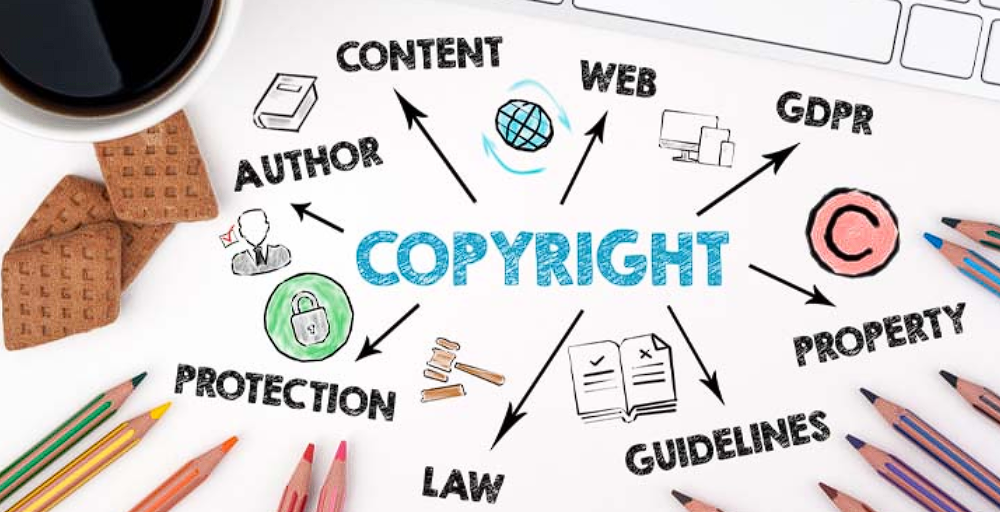
Copyright Registration Process for Businesses
Many business owners assume that the copyright registration process is complicated. However, when viewed as a whole, the process is actually relatively clear and systematic.
Here is a simple overview of the main stages involved:
1. Identify Creative Works
Businesses should identify creative works that play an important role in their marketing activities. These may include:
- Brand visual content
- Promotional graphic designs
- Product catalogs
- Advertising and promotional materials
These works are often used to attract customers’ attention and support sales activities.
2. Prepare the Required Documents
After identifying the work, the business owner needs to prepare the documents required for the registration application.
Read also: How to Obtain a Copyright Certificate
These documents will serve as the basis for recording the copyright associated with the submitted work.
3. Submit the Application
The registration application can then be submitted through DJKI’s online registration system. This stage marks the beginning of the administrative process for protecting the work.
4. Examination by the Relevant Authority
The submitted documents will be reviewed by DJKI to ensure that all required conditions have been fulfilled.
Once the documents are complete, the work can be recorded in the copyright protection system maintained in the DJKI database.
5. Issuance of the Certificate
The final stage involves the official recording of the work and the issuance of a copyright certificate as evidence of ownership of the registered work.
Risks of Leaving Promotional Content Unprotected
Promotional materials are often important assets in a business’s marketing strategy. However, without copyright protection, businesses may face several risks, including:
- Copying by competitors
Catalog designs, product photos, and promotional concepts can easily be copied by other parties if they are not properly protected.
- Plagiarism or unauthorized use by competitors
Catalog designs, product photos, and promotional concepts may be reproduced or used by other parties without authorization when there is no adequate legal protection.
- Loss of brand visual identity
If promotional works are copied by multiple parties, a brand may lose the distinctive visual characteristics that previously helped attract customers.
- Ownership disputes
Without clear evidence of ownership, legal disputes may arise if another party claims ownership of the same work.
- Losses from content production costs
A business may need to recreate promotional materials if an ownership dispute occurs, resulting in additional production costs.
For these reasons, many businesses are beginning to view copyright protection as an important part of their overall business asset management strategy.
FAQ
Can product photos be registered for copyright protection?
Yes. Product photos are considered photographic works and may be protected by copyright.
Can catalog designs be protected by copyright?
Yes. Graphic designs such as promotional catalogs may qualify for copyright protection.
Is understanding the copyright registration process important for online businesses?
Yes. It can be particularly important for businesses that rely heavily on visual content as part of their marketing activities.
Protect Your Business Promotional Content with Copyright Registration!
Promotional content plays an important role in helping customers recognize products in the market and supporting sales. Product photos, catalog designs, packaging illustrations, and promotional videos can all be important elements of a business’s marketing strategy.
Protecting these works through copyright registration can help ensure that your business has official evidence of ownership of the promotional materials used across various marketing activities.
Start protecting your creative works more conveniently by using the copyright registration service from Jasa Merek to help minimize errors during the application process.


Tagged with:
Hak Cipta AwareRelated Articles







 Home
 Articles

 Search
 Menu