Easy Trademark Registration in Indonesia: A Step-by-Step Guide to Improve Your Chances of Approval
Highlights
- Understanding the trademark registration process helps businesses secure clear legal protection for their brands.
- A registered trademark grants exclusive rights that support business growth, expansion, and licensing opportunities.
- Trademark applications can be submitted online through the Directorate General of Intellectual Property (DJKI), making the process more convenient.
- The substantive examination is the key stage where DJKI determines whether a trademark application will be approved or rejected.
- Service marks are one of the types of trademarks that can be protected through trademark registration in Indonesia.
Why Understanding the Trademark Registration Process Matters
Every business owner should understand how trademark registration works. Registering your trademark with Indonesia’s Directorate General of Intellectual Property (DJKI) provides legal certainty and helps protect your business from potential trademark disputes.
A registered trademark also becomes a valuable business asset. Strong intellectual property can increase your company’s value, create new partnership opportunities, and support future business expansion.
In addition, an officially registered trademark enhances your business’s credibility. Consumers are generally more likely to trust products and services offered under a legally protected brand.
However, trademark registration is not always straightforward.
Many applications are rejected because applicants unintentionally make mistakes during the filing process.
For this reason, understanding the correct registration procedure is essential for businesses of every size. Filing incorrectly can result in unnecessary expenses, including rebranding costs and filing a new trademark application.
Ways to Register Your Trademark
A registered trademark is one of the foundations of a strong brand identity. Here are the main ways to register your trademark in Indonesia.
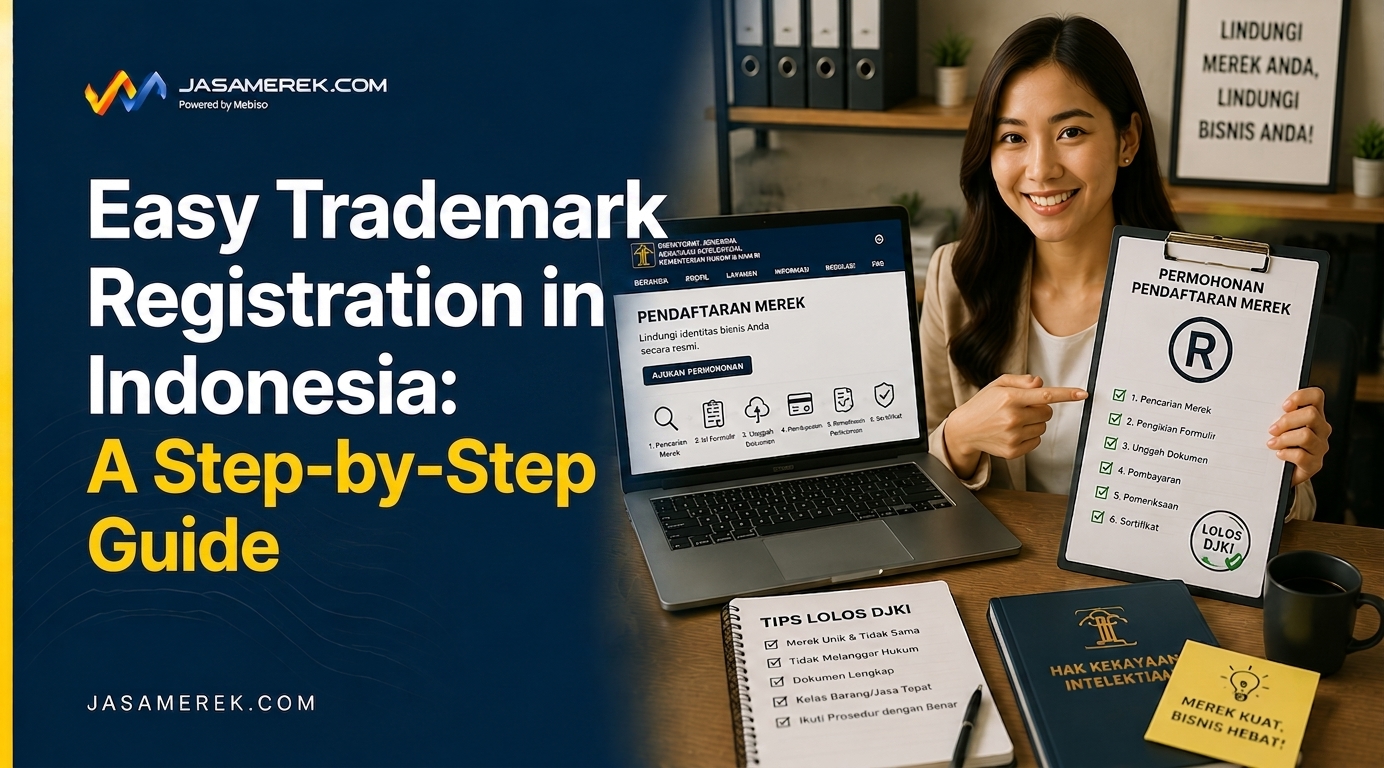
1. Register Directly Through the DJKI Online System
You can file a trademark application yourself through the official DJKI online portal.
The general process includes:
- Creating a user account
- Uploading the required documents
- Paying the official government fees
- Waiting for the examination process
- Receiving your trademark certificate if approved
Applicants are generally required to provide:
- Identification documents
- Trademark logo or label
- Trademark ownership declaration
- Goods and services classification
Ensure all submitted information is accurate and complete to reduce the risk of delays or rejection.
2. Hire an Intellectual Property Consultant
If you’re unfamiliar with the trademark registration process, working with an experienced intellectual property consultant can simplify the entire procedure.
A qualified consultant can assist with:
- Trademark availability searches
- Preparing application documents
- Filing your application
- Monitoring application status
- Responding to office actions or objections
Professional guidance can significantly reduce the likelihood of mistakes that could lead to rejection.
3. Conduct a Trademark Search First
Before filing your application, perform a trademark search through the DJKI database or with the assistance of a trademark consultant.
A trademark search helps determine whether another business has already registered a similar trademark.
When reviewing existing trademarks, pay attention to:
- Similar names
- Similar pronunciation
- Similar logos or visual appearance
- Similar goods and services classes
Conducting this search beforehand can greatly improve your chances of successful registration.
4. Choose the Correct Trademark Class
Selecting the appropriate trademark class is one of the most important steps in the registration process.
Trademark protection only applies to the specific classes of goods or services included in your application.
Choosing the wrong class may leave your business inadequately protected.
5. Prepare Complete Documentation
Carefully prepare all required documents before submitting your application.
Typical documents include:
- Applicant identification
- Signature
- Trademark logo or label
- Supporting ownership documents (where applicable)
Complete and accurate documentation helps ensure a smoother examination process.
6. Monitor Your Trademark Application
After filing your application, regularly monitor its status through the DJKI system.
If your application is rejected, carefully review the reason provided.
Depending on the circumstances, you may need to:
- Correct incomplete information
- Submit additional documents
- Modify your trademark
- Rebrand if another similar trademark already exists
Monitoring your application allows you to respond quickly when necessary.
How Long Does Trademark Registration Take?
Trademark registration involves several stages, each with its own estimated timeline.
Trademark Search
A basic trademark search can usually be completed within minutes using the DJKI database.
More comprehensive trademark analysis may require additional time.
Administrative Examination
After submission, DJKI reviews the application to verify payment, applicant information, and administrative requirements.
This stage typically takes around 15 business days.
Publication Period
If the application passes the administrative review, it is published for approximately two months.
During this period, third parties may file objections if they believe the trademark conflicts with their existing rights.
Substantive Examination
Once the publication period ends, DJKI conducts a substantive examination to determine whether the trademark satisfies all legal requirements.
This process generally takes five to seven months, depending on the examination queue.
Trademark Certificate Issuance
If the application is approved, DJKI issues an official Trademark Registration Certificate confirming your exclusive trademark rights.
Frequently Asked Questions
Do I have to use my trademark immediately after registration?
No.
There is no legal requirement to begin using your trademark immediately after registration.
However, under Indonesian trademark law, a registered trademark that is not used continuously for three consecutive years may become vulnerable to cancellation.
What if someone is already using a trademark but hasn’t registered it?
Indonesia follows the first-to-file system.
If another party has been using a trademark but has not officially registered it, the first eligible applicant to file the trademark application generally obtains the exclusive rights, provided the application satisfies all legal requirements.
Should small businesses register their trademarks?
Yes.
Trademark registration is highly recommended for micro, small, and medium-sized enterprises (MSMEs).
Registering your trademark helps secure exclusive rights to your brand and reduces the risk of losing your business identity to another party.
Simplify Trademark Registration with Jasa Merek
Many business owners find trademark registration complicated because of the legal requirements and administrative procedures involved.
With Jasa Merek, you don’t have to navigate the process alone.
Our experienced trademark professionals assist you from the initial trademark search through document preparation, application filing, status monitoring, and certificate issuance.
If your application encounters objections or is rejected, our team can also help you respond appropriately throughout the examination process.
Protect your trademark today and secure your business against future legal disputes with professional trademark registration assistance.


Tagged with:
JM AwareRelated Articles







 Home
Home
 Articles

 Search
 Menu
Menu