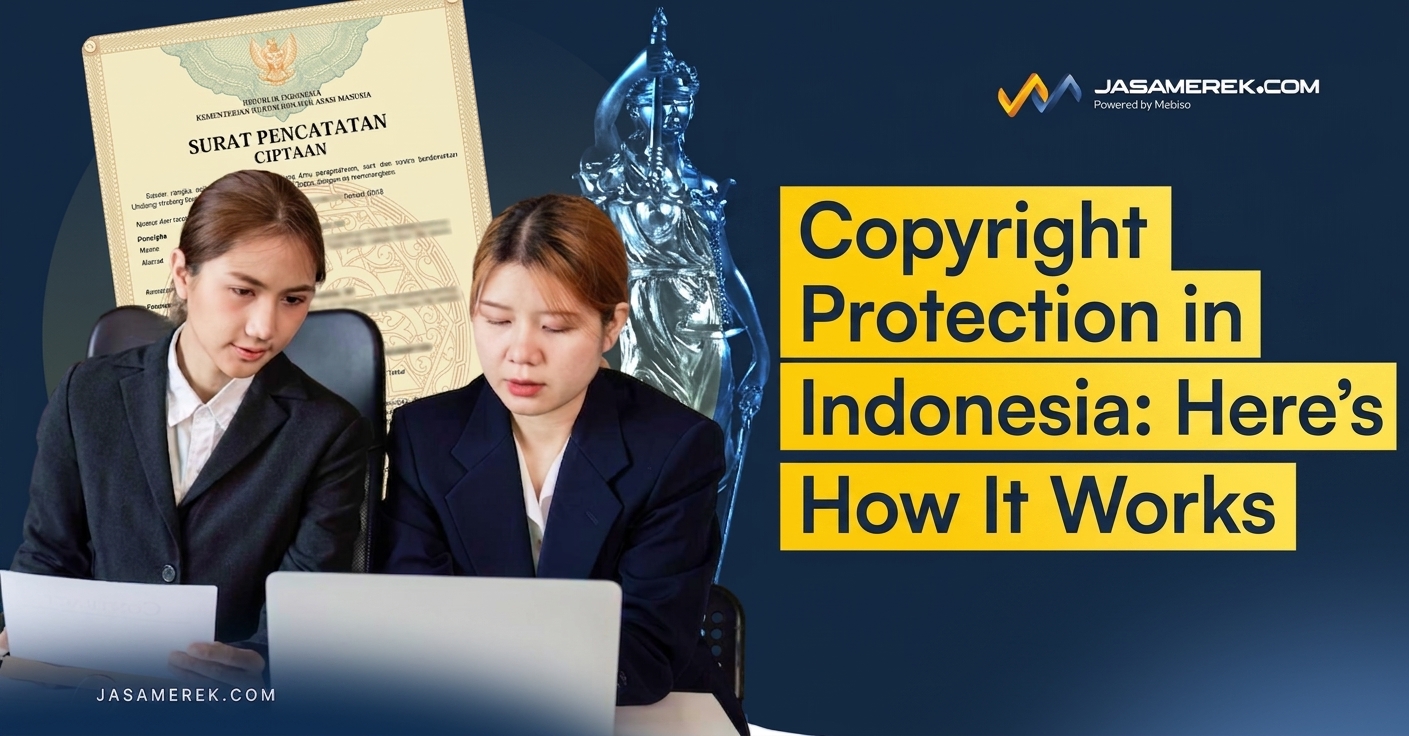
Copyright Protection in Indonesia: Here’s How It Works
Humans are unique among living beings because of their ability to think, create, and innovate. This intellectual capacity has enabled people to produce countless original works across art, literature, science, technology, and many other fields. However, creating something valuable is only part of the journey—you should also understand how copyright protection works.
One of the main reasons creators—including artists, writers, musicians, researchers, software developers, and other professionals—need to understand copyright law is to protect their original work.
When your work is properly protected, you gain greater peace of mind knowing that it is less vulnerable to legal disputes, plagiarism, piracy, or unauthorized use.
So, how does copyright protection work in Indonesia?
This guide explains the fundamentals of copyright protection, the types of works covered, the rights granted to creators, registration requirements, and the duration of protection under Indonesian law.
Understanding Copyright Protection
Think of copyright protection as an umbrella. Just as an umbrella protects you from the rain, copyright protection safeguards your creative work from unauthorized use, including piracy, plagiarism, and infringement.
But what does that actually mean?
Copyright is one of the most widely recognized forms of intellectual property (IP) protection worldwide. In Indonesia, copyright is governed by Law No. 28 of 2014 on Copyright.
Under this law, copyright is an exclusive right that arises automatically once an original work has been created and exists in a tangible form.
This definition highlights an important principle:
Copyright protection begins automatically as soon as your work is expressed in a tangible medium. If your creation is still only an idea or concept, it is not protected by copyright. The law protects the expression of an idea—not the idea itself.
What Types of Works Are Protected?
Many people assume that copyright only applies to artistic works such as paintings or music. In reality, Indonesian copyright law protects a much broader range of creative works.
Law No. 28 of 2014 recognizes approximately 19 categories of copyrightable works, which can generally be grouped into the following categories:
Artistic Works
These include:
- Paintings
- Sculptures
- Music and songs
- Films and cinematographic works
- Applied art
- Photography
- Other visual and performing arts
Literary Works
Protected literary works include:
- Books
- Written publications
- Anthologies
- Articles
- Scientific papers
- Other literary creations
Digital Works
Modern digital creations are also protected, including:
- Computer software
- Video games
- Databases
- Data compilations
- Other digital content
As long as a work falls within one of the protected categories under Indonesian copyright law and has been expressed in a tangible form, it may qualify for copyright protection.
Types of Rights Under Copyright
Many people think copyright simply means “ownership” of a creative work. In reality, copyright consists of two distinct categories of rights:
Moral Rights
Moral rights are personal rights that remain permanently attached to the creator.
These rights include the right to:
- Be recognized as the creator of the work
- Have your name displayed as the author
- Protect the integrity of your work from unauthorized modifications that could damage your reputation
Unlike economic rights, moral rights generally remain with the creator even if the copyright itself is transferred to another party.
Economic Rights
Economic rights allow creators or copyright holders to commercially benefit from their work.
These rights include the exclusive authority to:
- Reproduce the work
- Publish the work
- Distribute copies
- Perform or display the work publicly
- License the work
- Receive royalties
For example, when a song is performed commercially, the songwriter is generally entitled to receive royalties under applicable licensing agreements and copyright regulations.
How Long Does Copyright Protection Last in Indonesia?
Although copyright protection arises automatically once a work is created, it does not last forever. The duration of protection depends on the type of work involved.
Under Indonesian copyright law, protection periods generally include:
- The creator’s lifetime plus 70 years after their death for many literary and artistic works.
- 50 years from the first publication for certain categories of works.
- 25 years from the first publication for works of applied art.
Because protection periods vary depending on the type of creation, understanding how your work is classified is essential to determining how long your copyright remains legally protected.
Copyright Registration Requirements
Although copyright exists automatically once an eligible work is created, registering your copyright provides stronger legal evidence of ownership.
In Indonesia, copyright registration is administered by the Directorate General of Intellectual Property (DJKI) under the Ministry of Law.
To register a copyright, applicants generally need to provide:
- Personal identification
- Contact information
- Supporting documents
- Details of the work
- A copy or representation of the copyrighted work
The most important requirement, however, is that the work must already exist in a tangible form.
Ideas, concepts, plans, or unfinished thoughts cannot be registered because copyright protection only applies to completed expressions of creativity.
This requirement is consistent with the legal definition of copyright itself: copyright only arises once a work has been created and fixed in a tangible medium.
Therefore, when applying for registration with the DJKI, you must be able to demonstrate that your work already exists.
Examples of Copyright Cases in Indonesia
If copyright protection arises automatically, you may wonder why copyright disputes still occur.
The answer varies depending on the circumstances.
Some cases involve deliberate acts of piracy, plagiarism, or unauthorized commercial use. Others occur because individuals misunderstand copyright law and mistakenly believe they are permitted to use another person’s work.
Indonesia’s music industry has recently seen several high-profile copyright disputes.
One widely discussed case involved singer Vidi Aldiano, who was sued over the alleged unauthorized commercial use of the song Nuansa Bening, written by Keenan Nasution.
Another notable case involved Agnez Mo, who faced a copyright lawsuit after allegedly performing Ari Bias’s song Bilang Saja commercially without obtaining the necessary authorization.
These cases demonstrate why copyright protection is essential for creators, particularly those whose livelihoods depend on their intellectual property.
Proper copyright management can help creators reduce legal risks while ensuring they receive appropriate recognition and financial compensation for their work.
It’s Never Too Late to Protect Your Work
Copyright protection is essential for artists, writers, musicians, designers, software developers, and other creative professionals. However, it is equally important for businesses that develop original products, marketing materials, software, educational content, and other intellectual assets.
Protecting your work today can help prevent legal disputes in the future.
With Jasa Merek, registering your copyright in Indonesia becomes much easier. Our experienced intellectual property professionals can guide you through the registration process, helping you secure legal protection for your creative works with confidence.
Protect your creativity today—and safeguard your work for the future.
Frequently Asked Questions (FAQ)
Do I need to register my copyright?
Although copyright arises automatically once your work is created in a tangible form, registration provides stronger legal evidence of ownership and can be valuable if disputes arise.
Why should I officially register my copyright?
Official registration with Indonesia’s Directorate General of Intellectual Property (DJKI) provides a Copyright Registration Certificate, which serves as strong legal evidence of your ownership.
Can every creative work receive copyright protection?
Only works that fall within the categories protected under Indonesian copyright law and have been expressed in a tangible form are eligible for copyright protection.
How long does copyright protection last?
The duration depends on the type of work. Protection may last for the creator’s lifetime plus 70 years, 50 years from first publication, or 25 years from first publication for certain works such as applied art.
What rights does copyright provide?
Copyright grants two primary types of rights:
- Moral rights, which protect the creator’s identity and attribution.
- Economic rights, which allow the creator or copyright holder to commercially exploit the work and receive financial benefits such as royalties.


Tagged with:
Hak Cipta AwareRelated Articles





 Home
Home
 Articles

 Search
 Menu
Menu