Trademark Certificate Issuance Process: What You Need to Know

Highlights
- It is important for business owners to understand the trademark certificate issuance process to protect their business assets.
- A trademark certificate is valid proof that guarantees full protection for your business trademark.
- Trademark registration fees are affordable: IDR 1,800,000 per class for the general category and only IDR 500,000 per class for MSMEs.
- Using professional services makes the entire trademark certificate issuance process easier and hassle-free.
- With a trademark certificate, your business is better protected and prepared to face competition and potential disputes.
As a business owner, it is important to understand the trademark certificate issuance process and the various requirements involved. For a business, a trademark is an identity that distinguishes your products from those of competitors.
That is why a trademark should be registered and receive proper legal protection. Without registration, your business may face trademark disputes or other legal issues involving third-party use, which can clearly harm your company.
In this article, you can learn about the trademark certificate issuance process, from the preparation and registration stages to the steps that follow certificate issuance.
Trademark Certificate Issuance Process from Start to Finish
Here is the series of stages involved, from the initial trademark registration to the issuance of the trademark certificate:
1. Conduct a Trademark Search
Before registering a trademark, you should conduct a trademark search first. This is important to determine whether an identical or similar trademark has already been registered for related goods or services.
If a conflicting trademark is found, you may need to reconsider or modify the trademark you intend to register. If no significant conflict is identified, you can proceed with the registration process.
2. Prepare the Requirements
After determining that your trademark can proceed to the registration stage, prepare the required documents. Some of the documents you may need to provide include:
- Identity card (KTP) of the business owner or applicant.
- Taxpayer Identification Number (NPWP) of the company or individual.
- Ministry of Law approval documents and the company’s deed of establishment, where applicable for a legal entity.
- Trademark label or representation in PNG or JPG format.
- Statement letter for Micro and Small Business (UMK) applicants with the required stamp duty.
- Certificate or recommendation for an MSME assisted by a relevant government agency, where required.
3. Registration
Once all the required documents are ready, you can proceed with the trademark registration. The registration process can be completed online through the official DGIP trademark platform.
- First, visit https://merek.dgip.go.id/.
- Then click Register and select the appropriate applicant type, either Individual or Legal Entity.
- Enter the business owner’s or trademark applicant’s information.
- Complete all the required information using valid and active data.
- Upload the KTP or Deed of Establishment file that you prepared earlier.
- Click Register and wait for the verification email from DGIP.
- After successfully creating an account, log in to the DJKI system and select Trademark Application.
- Enter the trademark applicant’s or business owner’s information.
- Complete the trademark information, including the trademark type, trademark name, trademark description, and translation if the trademark uses a foreign language.
- Add the relevant trademark class and make sure you select the appropriate class for your goods or services.
- Click Add to upload the remaining required documents as attachments.
- Proceed to the payment stage. The system will automatically generate a billing code based on the application form you completed.
- Make the payment using the billing code provided.
- After the payment is successful, upload the payment receipt. The trademark registration application process is then complete.
4. Administrative Examination
The trademark certificate issuance process does not end with the submission of the application. After registration, your application will proceed to several additional stages, beginning with administrative examination.
Administrative examination takes place after the trademark application has been successfully submitted.
DJKI will review the completeness of the required documents you have submitted.
This examination generally takes around 15 days. If any documents or information are incomplete, you may be given time to correct or complete the deficiencies in accordance with the applicable provisions.
5. Trademark Publication
After passing the administrative examination, the application proceeds to the publication stage. At this stage, the trademark you have applied for will be published by DJKI in the Electronic Trademark Official Gazette.
The relevant information can be accessed through https://pdki-indonesia.dgip.go.id/.
Once the trademark enters the publication period, third parties may submit an opposition to the published trademark.
This may occur if a third party believes that the trademark conflicts with an existing trademark or otherwise has grounds for opposition. As the applicant, you will have an opportunity to respond to the opposition in accordance with the applicable procedure and deadline.
6. Substantive Examination
If no opposition is submitted during the publication period, the application proceeds to substantive examination. DJKI, as the competent authority, will conduct a more comprehensive assessment of the trademark application.
The purpose is to determine whether the trademark meets the requirements for registration.
The assessment may consider factors such as potential conflicts with existing trademarks, distinctiveness, and other requirements under applicable trademark law.
The substantive examination process may take approximately 30 to 90 working days, depending on the applicable procedure.
7. Rejection or Trademark Certificate Issuance
The final stage is the decision on whether the trademark application will be accepted or rejected. After completing the substantive examination, DJKI will issue a decision regarding the trademark application.
If the application is approved, DJKI will proceed with the issuance of the trademark certificate.
However, if the application is rejected, DJKI will provide the grounds for rejection.
As an applicant, you may have an opportunity to submit a response or appeal against the rejection within the applicable period. You may also have the opportunity to submit a new trademark application, subject to the applicable requirements.
Requirements for Trademark Certificate Issuance
There are several provisions you should pay attention to during the trademark registration and certificate issuance process, particularly regarding the eligibility of the trademark itself. Under Law No. 20 of 2016, a trademark cannot be registered if it:
- Conflicts with the state ideology, morality, religion, public decency, or applicable laws and regulations.
- Contains elements that may mislead the public.
- Contains information that does not correspond to the characteristics, benefits, or quality of the goods.
- Lacks distinctive character.
- Consists of a name or symbol that has become commonly used.
In addition, a trademark may face refusal if another party has already registered or has prior rights to a conflicting trademark.
Once issued, a trademark registration is generally valid for 10 years.
After the 10-year protection period expires, the trademark can be renewed in accordance with the applicable requirements. Another important aspect to consider is the registration fee.
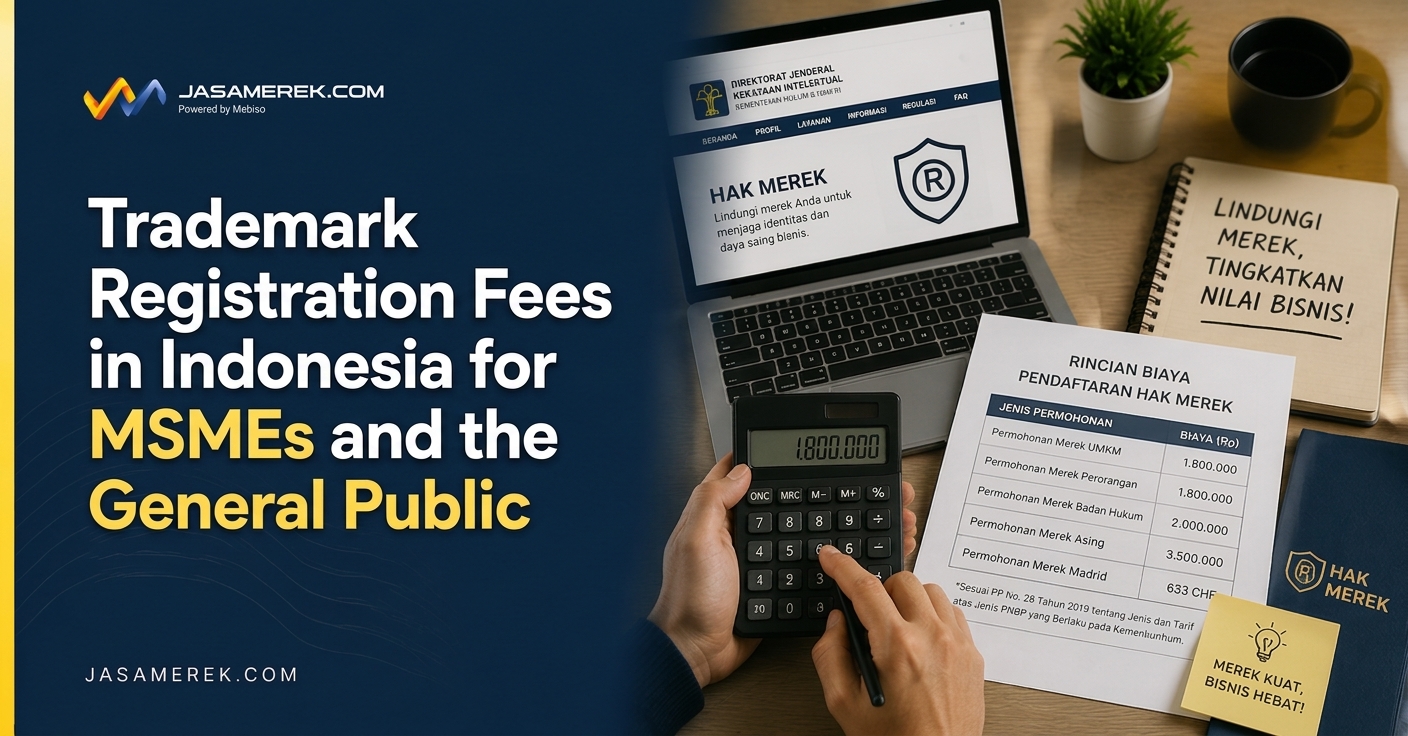
The trademark registration fee for the general category is Rp1,800,000 per class. For Micro and Small Businesses (UMK), the fee is Rp500,000 per class.
Those are the key requirements and stages involved in the trademark certificate issuance process. Essentially, a trademark certificate is an important document that supports the legal protection of your business trademark.
You can complete the registration process independently. If you want a more practical and convenient option, you can use trademark registration services from Jasamerek.com.
Jasamerek.com provides assistance from brand experts and uses AI technology to help analyze trademarks more accurately.
The trademark application process can also be handled more efficiently, potentially taking as little as one day for the preparation and submission process. Contact Jasamerek.com to get professional assistance with your trademark registration.
FAQ
1. Where can I collect my trademark certificate?
You can obtain your trademark certificate through the Directorate General of Intellectual Property (DJKI), subject to the applicable certificate delivery or issuance procedure.
2. How long does it take for a trademark certificate to be issued?
Generally, the overall trademark registration process may take around 10 to 12 months, although the actual timeframe can vary depending on the examination and other stages of the application.
3. Who issues the trademark certificate?
The trademark certificate is issued by DJKI, or the Directorate General of Intellectual Property.


Tagged with:
Sertifikat AwareRelated Articles







 Home
 Articles

 Search
 Menu